cd ..
EN
Networking
The Forgotten Shield of the Internet: Why Your Firewall Is More Crucial Than You Think (And No, It's Not Just the Windows One)
R
Rodolfo Echenique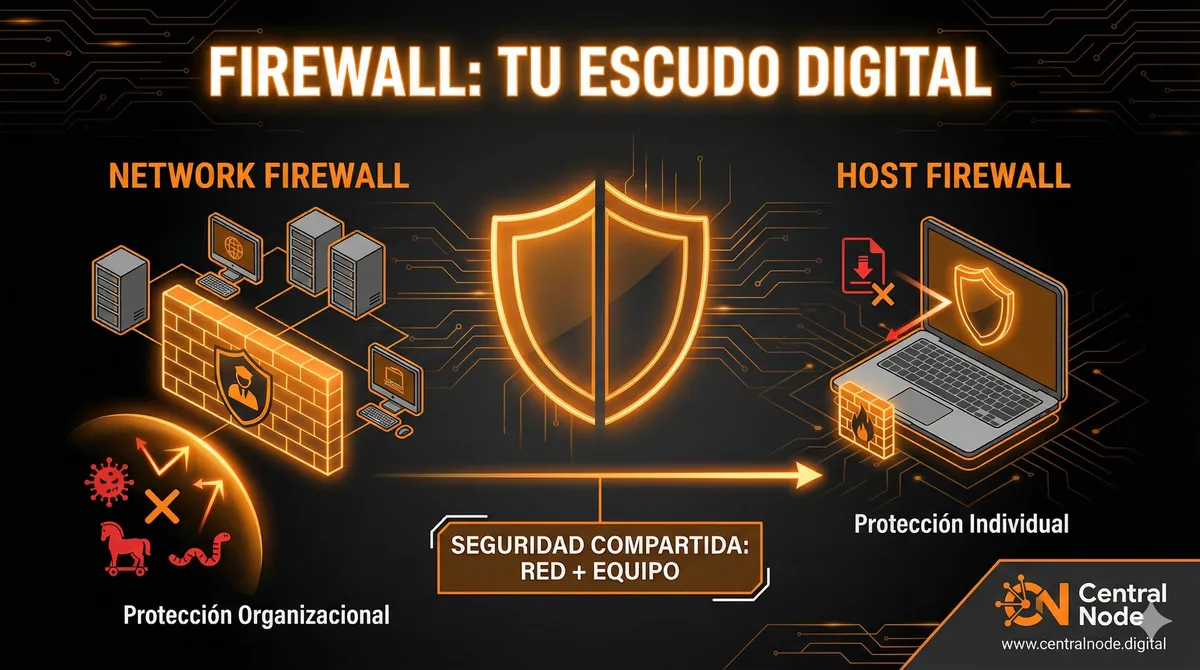
Automated Translation: This article was originally written in Spanish and translated by Gemini AI.
In my journey through the world of technology, I have witnessed countless times how a security breach turns into a nightmare. And most of the time, the entry point was obvious, or even self-inflicted.
The word "firewall" resonates in the minds of almost everyone. From the computer enthusiast to the home user, many remember that kind (or annoying) Windows window that pops up when you try to install a program. But did you ever stop to think about why that alert appears? The answer is simple and vital: to protect you.
Unfortunately, the common instinct is usually to silence those notifications or, worse yet, deactivate the firewall completely. At that moment, without realizing it, you have just shouted to the entire network: "Go ahead, my doors are wide open! Send me whatever you want!" And right there, that is exactly where the problems begin.
The Firewall: Your Personal Information Gatekeeper
Think of your firewall as the security gatekeeper of your digital home or company. Its job is simple: to inspect and control who enters and who leaves your device or network. It blocks unauthorized traffic and suspicious connections, acting as a first line of defense against:
- Viruses: Malicious codes that replicate and damage systems.
- Trojans: Programs disguised as legitimate software to steal data or take control.
- Worms: Malware that spreads rapidly across the network without user intervention.
In essence, the firewall is your fundamental shield to block the attacks of this "army" of malware.
Beyond Perception: A Firewall Is No Longer an Indestructible Wall
This is where reality surpasses common perception. Many organizations still mistakenly believe that simply installing a firewall (physical or virtual) at the border of their network – between the Internet provider and their internal equipment – is a divine and impenetrable armor against any cyberattack.
Nothing could be further from the truth in the current digital age!
With the speed of technological advancement and the sophistication of malicious software, a firewall alone is no longer enough. It is essential, yes, a fundamental piece of the security puzzle, especially if you handle sensitive information. But the threat landscape has evolved.
The Enemy Can Also Be Inside: The Invisible Threats
Nowadays, cyber attacks do not only come from outside. They can also arise from within your own network. Think of seemingly innocent actions that become key entry points for malware:
- Connecting a personal pendrive (or one "found" on the street).
- Accessing websites with suspicious content that hides malware.
- Downloading an infected email attachment.
In these scenarios, users do not have malicious intent, but they are precisely the focal points that cybercriminals exploit to launch inadvertent attacks.
Two Sides of the Same Shield: Types of Firewall
To face these multifaceted threats, firewalls come in different forms:
- Network Firewall: A fortress for the entire organization. This equipment (physical or virtual) is deployed by network administrators to monitor and control corporate-level traffic, detecting and preventing mass attacks.
- Host Firewall (or Personal Firewall): Your personal guard. This software, which is installed along with your operating system (such as the Windows Firewall), allows you to control which applications can connect to the network and what information can enter or leave your device, protecting you at an individual level.
Cybersecurity: A Shared and Constant Mission
So, are firewalls necessary? Yes, very much so! They are the first layer of defense. But the true strength of computer security lies in a shared responsibility.
- For Users: Your Windows firewall and a good antivirus are your most basic and important allies. Make sure they are ACTIVE and up-to-date. If you don't have them, contact your IT team immediately! Every online action is a potential entry point, so awareness and good practices are your best protection.
- For Network Administrators: Your role is crucial. It's not about "spying," but proactively monitoring traffic to prevent the leakage of sensitive information. Stay current with security patches and updates for your equipment, and constantly review network activity.
- For System Administrators: Servers are the heart of the organization, holding vital information. Firewall configuration on these devices is a top priority. Regularly audit and adjust their policies to ensure robust, multilayer protection.
Cybersecurity is an ongoing commitment. Technology and user awareness must work hand in hand. Staying informed, implementing best practices, and having comprehensive security solutions are the pillars for building a safer and more resilient digital environment for everyone. Don't leave your shield forgotten.