cd ..
EN
Networking
The Invisible Enemy in Your Network: Unveiling the World of Malware and How to Protect Your Business
R
Rodolfo Echenique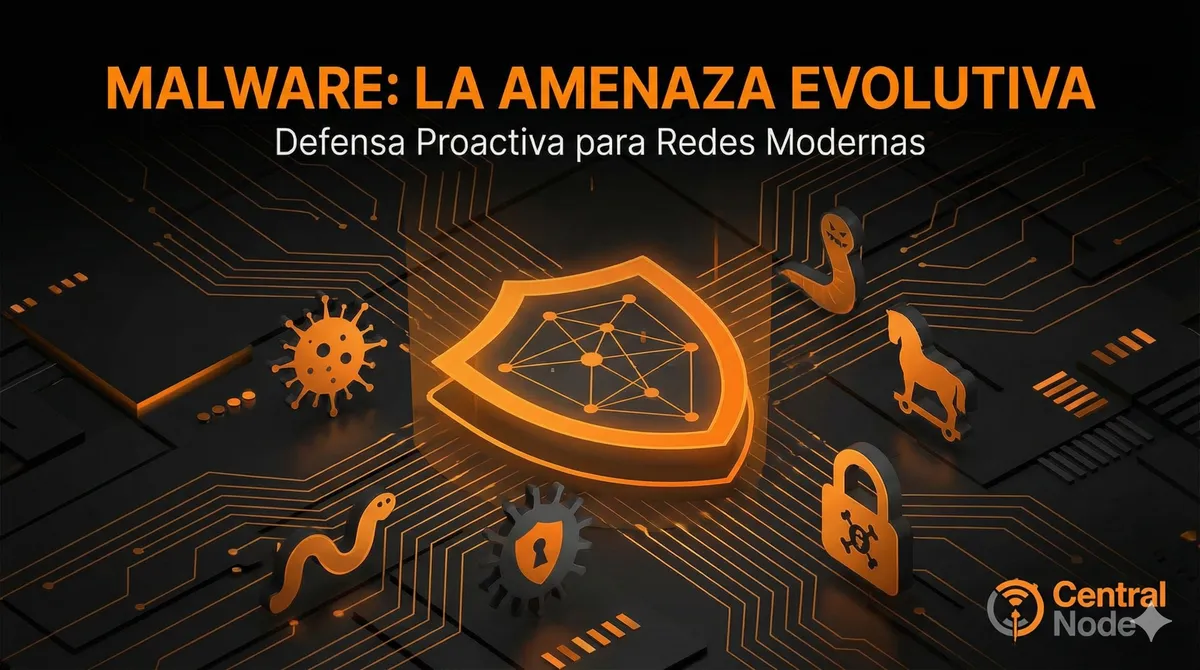
Automated Translation: This article was originally written in Spanish and translated by Gemini AI.
On the fast-paced digital highway we live on, a shadow persists, mutating and becoming more sophisticated every day: malware. These malicious programs, designed with a single intention – to infiltrate, damage, and exploit our systems – are the recurring nightmare of network administrators and a constant threat to any organization.
Ignoring its evolution is a luxury no one can afford. Incessant vigilance and proactive strategies are no longer an option, but an existential necessity. In this article, we will unravel exactly what these threats are, explore their most insidious tactics, and, most importantly, equip the brave guardians of our networks with the key recommendations to defend our most valuable assets.
Malware: Software Designed for Chaos
The term "malware" is a contraction of "malicious software," an umbrella covering a vast arsenal of computer programs with harmful purposes. Each type possesses specific methods for infiltration, propagation, and sowing chaos in systems and networks.
The Cybercriminal’s Arsenal: Ingenious and Destructive Strategies
- Viruses: Think of them as digital parasites. They attach themselves to legitimate files or programs and only come to life when you execute them. Once active, they replicate and can destroy data, alter system functionality, or open backdoors.
- Worms: They are the autonomous "travelers" of malware. Unlike viruses, they do not need a host file to propagate. They spread across networks at breakneck speed, exploiting vulnerabilities to infect countless systems without user intervention.
- Trojans: The "Trojan horses" of the digital world. They cunningly disguise themselves as legitimate and useful software to trick you into installing them. Once inside, they open a secret "backdoor," allowing attackers unauthorized access to your system or the download of further malware.
- Ransomware: The modern nightmare of any company. This malware encrypts your files or completely blocks access to your systems, demanding a "ransom" (usually in cryptocurrencies) to restore access. It has paralyzed critical operations for countless companies and institutions globally, demonstrating a devastating impact.
- Spyware, Adware, Rootkits... and more: The list is long and continues to grow, each with its own tactic for stealing information, displaying unwanted advertising, or stealthily gaining control.
Defending the Fortress: Key Recommendations for Network Administrators (and the Entire Organization)
Defense against malware is not a single-person task, but a comprehensive strategy involving technology, processes and, crucially, people.
- Constant Maintenance and Updates: Your first and most critical line of defense. Keep all operating systems, software, and hardware firmware updated. Every security patch is a door closed to known attackers.
- Powerful (and Updated) Firewalls and Antivirus: They are the essential guardians. Implement robust firewalls to control network traffic and trusted antivirus/anti-malware programs on every endpoint. Ensure that their signature databases are updated automatically and frequently.
- User Education: Your Best Human Shield: The weakest link is often the user. Training your team on secure online practices – how to identify phishing emails, suspicious links, dubious downloads, and the danger of external devices – is as vital as any security software. Malware often infiltrates through inadvertent actions.
- Regular and Strategic Backups: Your ultimate insurance policy. Perform periodic and verified backups of all critical data. Ensure these backups are isolated from the main network so that, in the event of a ransomware attack, you can restore your operations with minimal data and time loss.
- Active Monitoring and Rapid Response: Prevention is not enough; detection is necessary. Implement network monitoring systems to identify unusual behavior patterns, anomalous traffic, or unauthorized accesses. Early detection and rapid response are crucial for minimizing the impact of an attack.
Conclusion: The Cybersecurity Endurance Race
In the incessant dance between network administrators and malware creators, the only viable strategy is anticipation and constant adaptation. Staying one step ahead involves a dynamic combination of cutting-edge technology, continuous education for all members of the organization, and a well-defined incident response strategy.
Cybersecurity is not a "set it and forget it" task; it is an endurance race. Network administrators and IT professionals, your role is more critical than ever. Let us continue learning, adapting, and strengthening our defenses. The resilience and security of our digital infrastructure are firmly in our hands.